
Moon Through Telescope in Delhi NCR Real View from 12-Inch Telescope
The Moon may look beautiful with the naked eye, but through our professional telescope it transforms into a breathtaking world filled with giant craters, towering mountains, ancient lava plains, and dramatic shadows. Experience the Moon in stunning detail at Real Sky Observatory in Greater Noida.
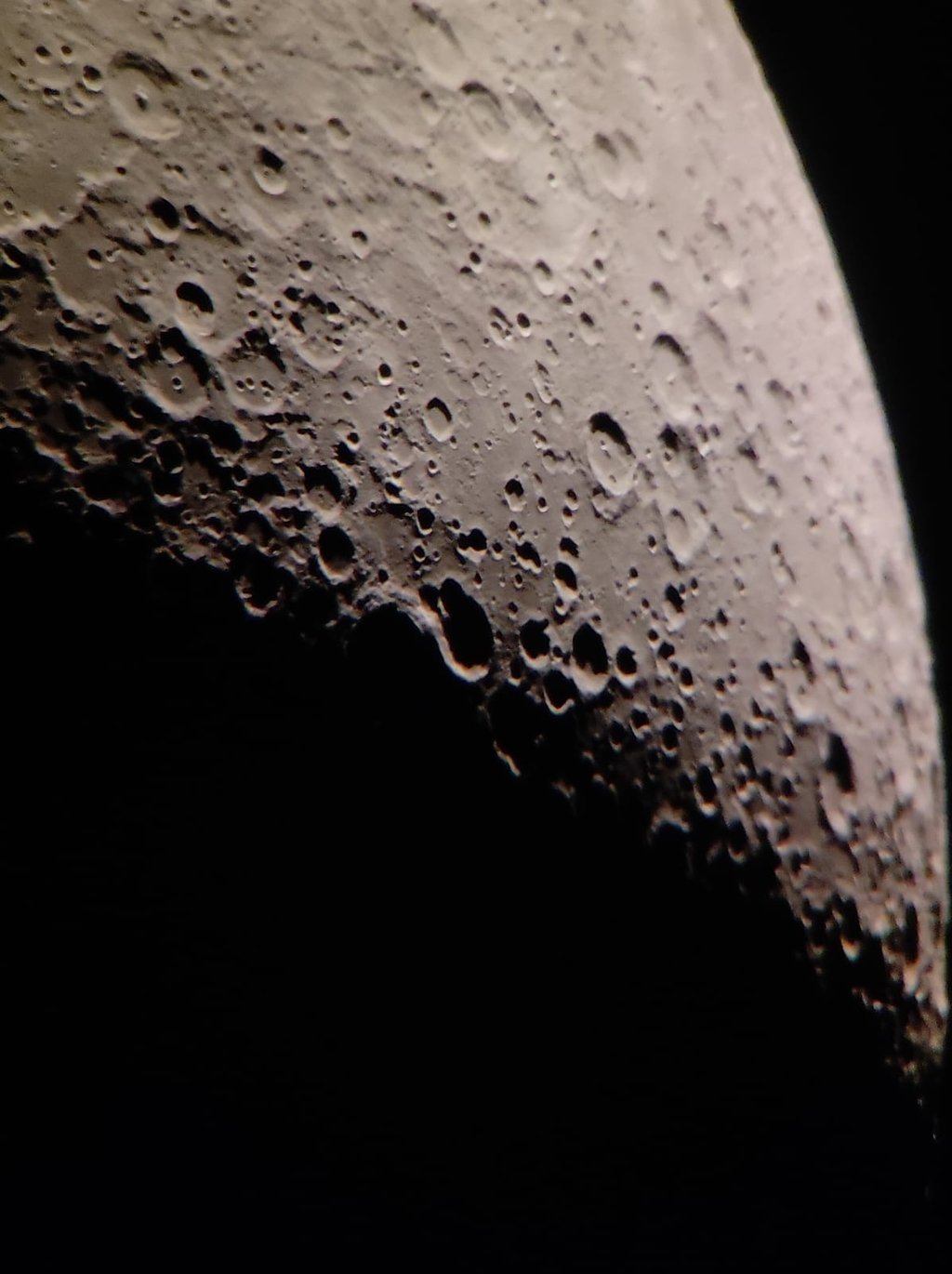

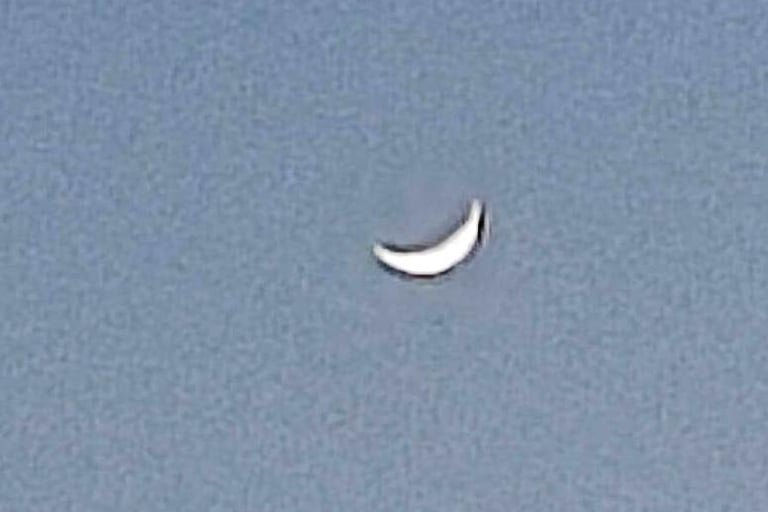

Moon Through Mobile Camera
Moon Through Our Telescope + Mobile Camera
It's Not Just a Bright Circle It's Another World
How to View the Moon from Delhi NCR
Many people think city lights and dust make stargazing impossible. But the Moon is too bright to be hidden by city smog! It reflects so much sunlight that it cuts right through the haze.
When you look through a large, powerful telescope, the view is perfectly clear, bright, and packed with amazing details.
What you will see and do:
🌕 See Huge Craters – Look closely at deep crash zones on the Moon.
⛰️ Spot Moon Mountains – See massive peaks throwing long shadows.
🌋 Explore Ancient Lava Plains – View the dark, smooth parts of the surface.
🔭 Live Guided Viewing – Let our experts guide you through the night sky.
📸 Take Mobile Photos – Click stunning Moon pictures right through the telescope lens!
👨👩👧 Perfect for Families – A fun, educational evening for kids and adults alike.
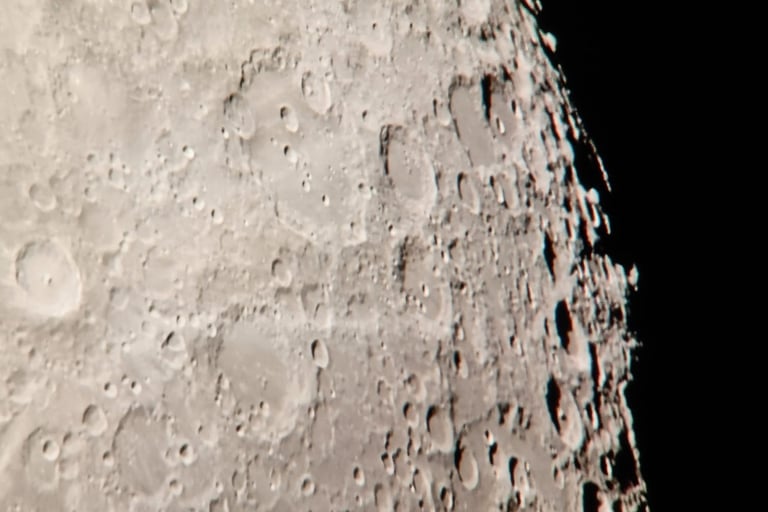
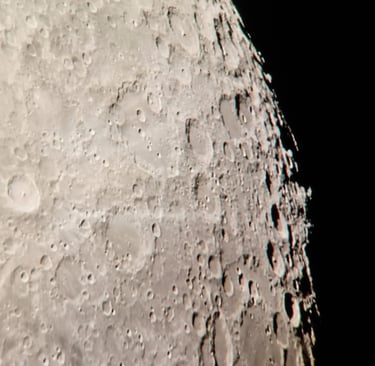
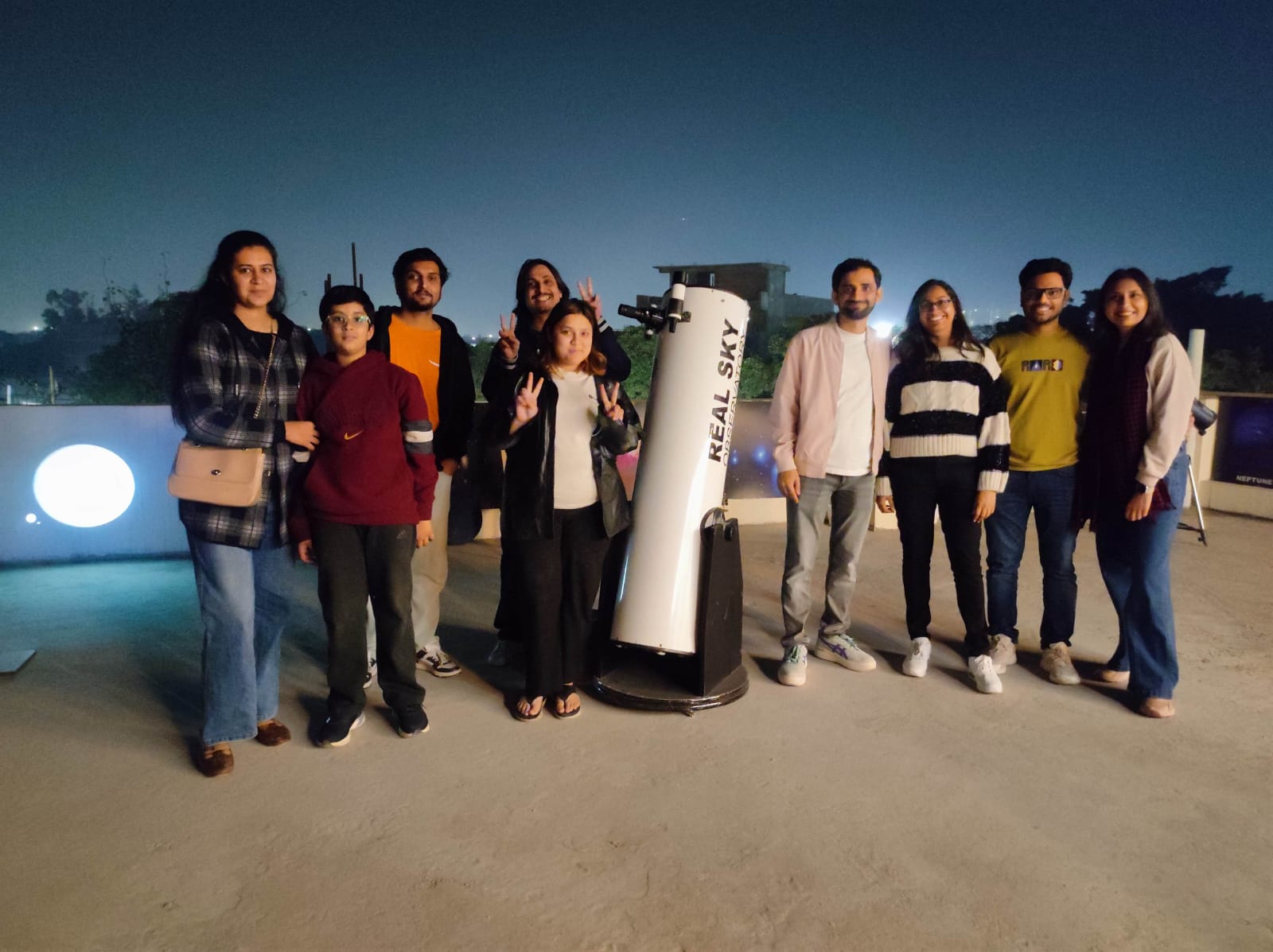

Our Professional 12 Inch Telescope
High Surface Details
Imagine looking into a crater almost 100 km wide while sunlight casts long shadows across its rugged walls
What You'll See Through Our Telescope
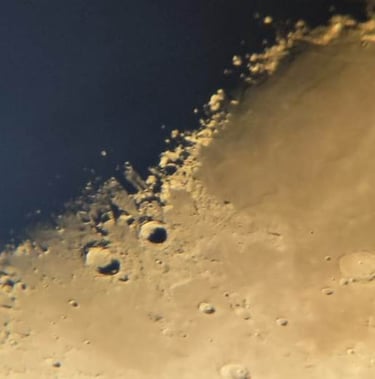

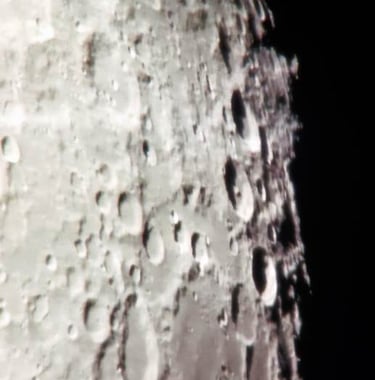

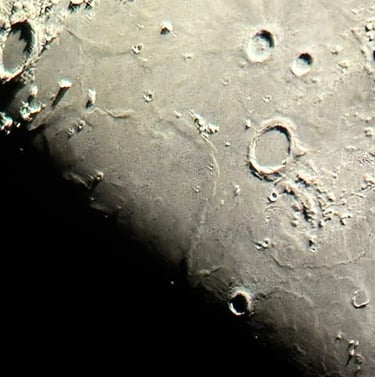

Lunar Craters
Mountains and Cliffs
Lunar Seas (Maria)
Best Moon Phases for Telescope Viewing
Why Full Moon Is Not Always Best
Many beginners assume a Full Moon provides the best telescope view.
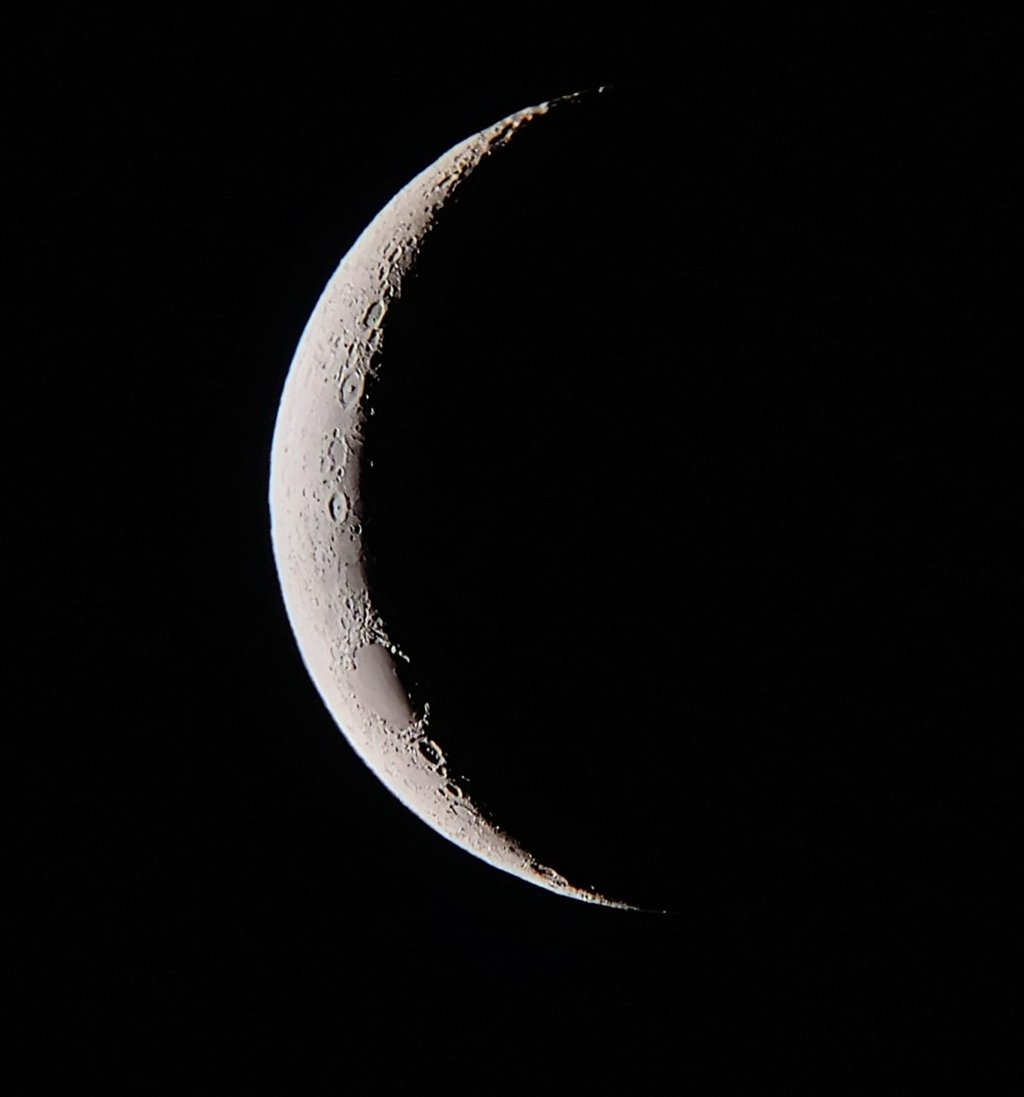
In reality, the most detailed observations usually occur during the Crescent and Quarter phases because shadows reveal surface features more clearly.



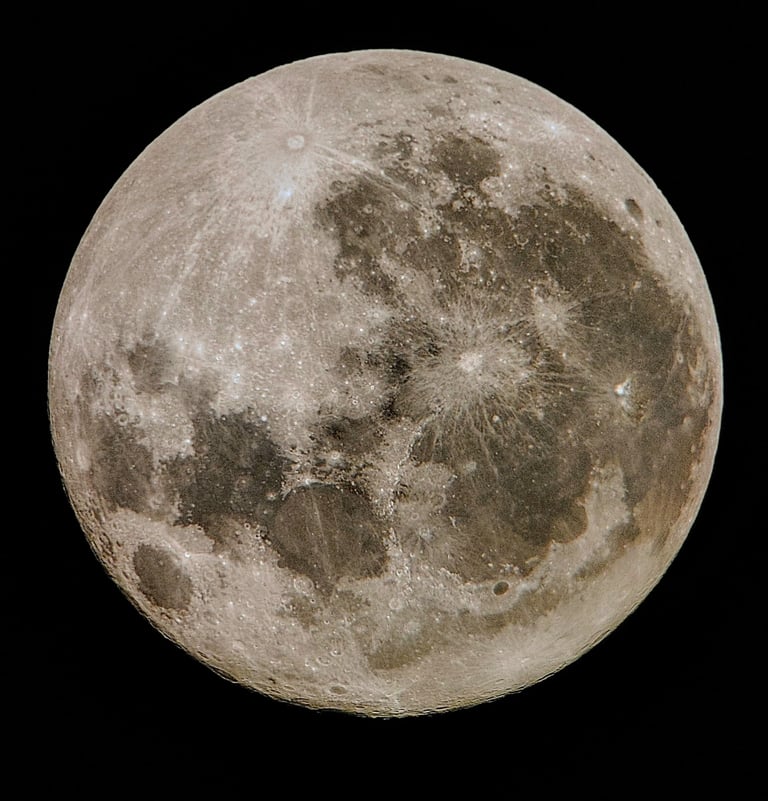
During Full Moon
During Crescent Phase
The same lunar region looks dramatically different during different phases. Near the terminator—the boundary between lunar day and night—shadows reveal craters, mountains and surface relief much more clearly.
Observe the Moon at Real Sky Observatory
Experience the Moon through a powerful telescope and discover details impossible to see with the naked eye.
Whether you're a first-time visitor or an astronomy enthusiast, lunar observation is one of the most rewarding experiences in the night sky.
Book your telescope viewing session today and explore our nearest celestial neighbor
Dates are based on Indian Standard Time (IST) and may vary slightly in other countries. This calendar is updated regularly for visitors from Delhi NCR
For thousands of years, humans have looked up at the Moon with a sense of wonder. It’s our closest celestial neighbor, yet most people only ever see it as a bright white disk in the night sky.
If you have ever wanted to truly understand the Moon—from the cosmic meanings behind terms like "Supermoon" to the exact spots you can see through a high-powered telescope right here from Delhi NCR—this guide is for you.
Decoding Famous Lunar Terms
What is a Full Moon?
A Full Moon occurs when the Moon is positioned directly opposite the Sun with Earth in the middle. This causes the entire illuminated side of the Moon to face us. While beautiful to the naked eye, a Full Moon is actually the least ideal time to look through a telescope because the direct sunlight washes out all the shadows, making the surface look flat.
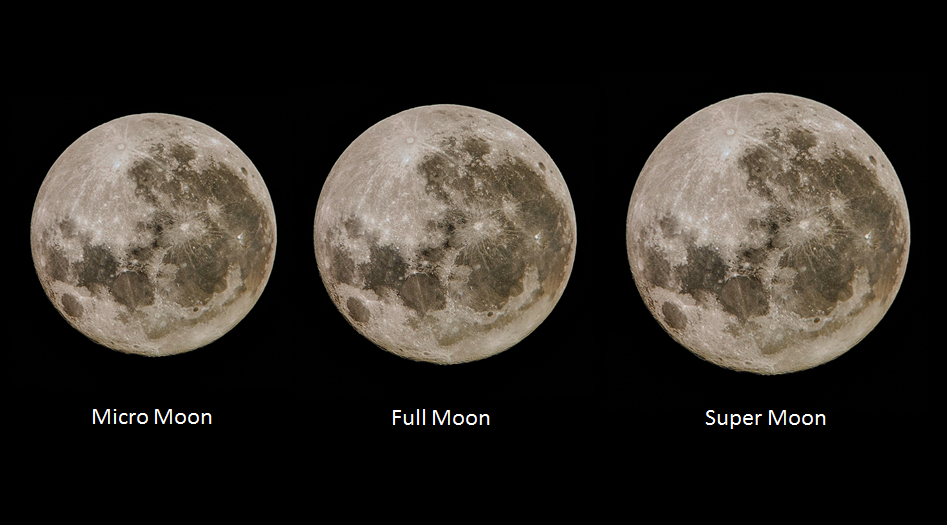
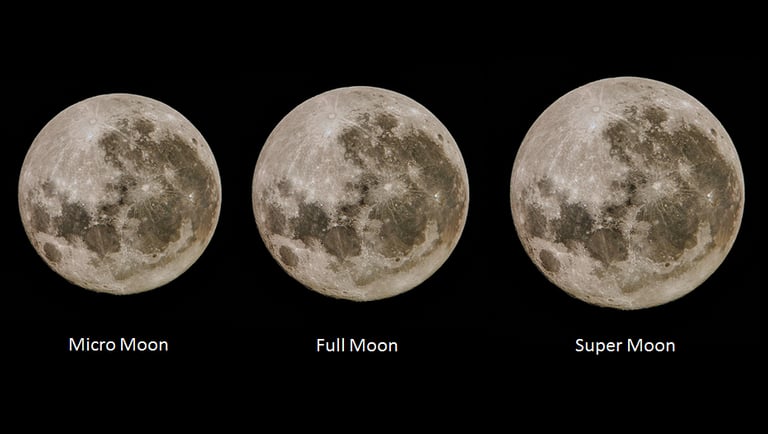
The Moon doesn't orbit Earth in a perfect circle. Instead, it follows an elliptical (oval-shaped) orbit, which means its distance from Earth changes throughout the month:
Supermoon (Perigee): Occurs when a Full Moon happens at the Moon's closest point to Earth, at a distance of approximately 356,400 km Upcoming Visible on 24 Dec 2026.
Full Moon (Average Distance): The baseline standard Full Moon, which sits at an average distance of 384,400 km Upcoming visible on 26 Sep 2026
Micromoon (Apogee): Occurs when a Full Moon happens at the Moon's farthest point from Earth, at a distance of approximately 405,000 km Upcoming visible on 18 Jul 2027.
Compared to an average Full Moon, a Supermoon is about 7% larger and 15% brighter.
What is a Blue Moon?
Despite its name, a Blue Moon does not appear blue. It is simply a calendar event, not a change in the Moon's color.
The most common definition of a Blue Moon is the second Full Moon that occurs within the same calendar month. Since a lunar cycle lasts about 29.5 days, this rare event happens approximately once every two to three years.
Upcoming Visible On- 31 Dec 2028
What are Supermoons and Micromoons?
What Makes Each Moon Event Special?
🌕 Full Moon – The Moon appears fully illuminated and brightest in the sky.
🌕 Supermoon – A Full Moon that appears slightly larger and brighter because it's closer to Earth.
🔵 Blue Moon – A rare calendar event with two Full Moons in one month.
🌑 New Moon – The darkest nights, perfect for observing galaxies, nebulae, and star clusters.
🔭 Best Moon Viewing – The Waxing Crescent to First Quarter phase offers the most dramatic views of craters and mountains through a telescope.
Size Comparison: Micromoon vs. Full Moon vs. Supermoon
Can you see Moon craters through a telescope?
Yes. Even modest telescopes reveal craters, mountains, and valleys.
What is the best Moon phase for observation?
The First Quarter and Crescent phases usually provide the most detail.
Can children observe the Moon?
Absolutely. The Moon is one of the best beginner astronomy targets.
Can I photograph the Moon with my phone?
Yes. Many visitors successfully capture Moon images through telescope eyepieces.
Is the Moon visible every night?
Not every night. Visibility depends on the Moon's phase and position.
Frequently Asked Questions
Experience seeing mountains on another world
The Universe Is Closer Than You Think


The Moon changes every night. Check this week's lunar phase and discover what you'll observe through our telescope during your visit.
Explore More Astronomy Experiences


Solar Eclipse Guide


Meteor Showers


Browse real telescope images, visitor experiences, and stunning views captured during our public stargazing sessions.
This Week In The Sky
Address
hello@realsky.in
© 2026. Real Sky Observatory. All Rights Reserved.
WhatsApp / Call
+91- 9217202436
Real Sky Observatory, at B. M Plaza Terrace, Greater Noida, India